
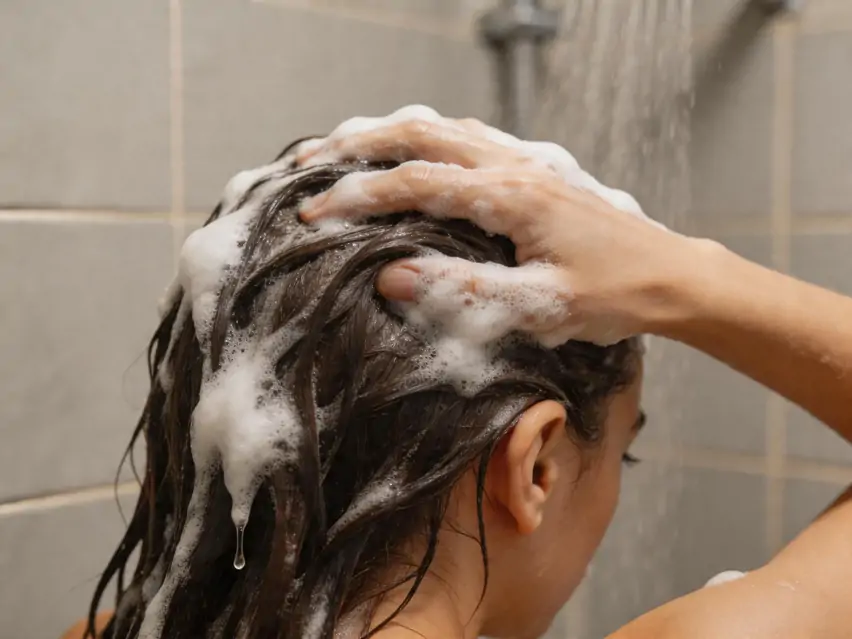
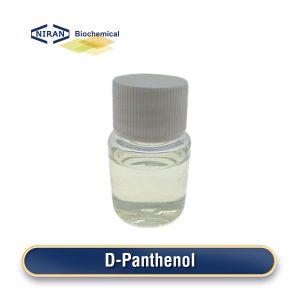
D-Panthenol (Provitamin B5) is one of the most widely used ingredients in hair care for this purpose. It helps retain moisture, improve hair strength, and enhance shine without adding heaviness, making it suitable for a wide range of rinse-off and leave-on formulations.
This article focuses on how D-Panthenol works in hair systems, its key benefits, typical applications, and practical formulation considerations.
How D-Panthenol Works on Hair
D-Panthenol is a small, water-soluble molecule that can penetrate the hair shaft and also deposit on the surface.
Its performance in hair care mainly comes from two mechanisms:
- Penetration into the cortex: helps improve internal moisture balance and elasticity
- Film formation on the cuticle: creates a smooth, protective layer that enhances shine and reduces friction
This dual action allows it to deliver both instant conditioning effects and longer-term hair quality improvement.
Key Benefits of D-Panthenol for Hair
1. Moisture Retention and Hydration
D-Panthenol acts as a humectant, attracting and retaining moisture within the hair fiber.
- Improves dryness in damaged or porous hair
- Helps maintain softness over time
- Supports overall hair manageability
2. Improved Hair Strength and Elasticity
By enhancing moisture balance inside the hair shaft, D-Panthenol helps improve flexibility and reduce brittleness.
- Reduces breakage during brushing or styling
- Improves resistance to mechanical stress
- Suitable for chemically treated hair (bleached, dyed, permed)
3. Shine Enhancement and Smoothness
The thin film formed by D-Panthenol on the hair surface helps smooth the cuticle.
- Increases light reflection → better shine
- Reduces roughness and frizz
- Improves combability (wet and dry)
4. Scalp Care and Soothing Effect
Beyond hair fibers, D-Panthenol is also beneficial for scalp formulations.
- Helps reduce dryness and irritation
- Supports scalp barrier function
- Suitable for sensitive scalp products
Applications in Hair Care Products
D-Panthenol is highly versatile and can be used in both rinse-off and leave-on systems.
Shampoos
- Provides mild conditioning without buildup
- Helps reduce the drying effect of surfactants
- Improves post-wash softness
Typical use: 0.2% – 1%
Conditioners
- Enhances detangling and smoothness
- Works synergistically with cationic conditioning agents
- Improves overall hair feel
Typical use: 0.5% – 2%
Hair Masks and Treatments
- Targets dry and damaged hair
- Supports deeper conditioning systems
- Helps restore elasticity
Typical use: 1% – 5%
Leave-in Products (Sprays, Serums, Creams)
- Adds lightweight moisture and shine
- Reduces frizz without heaviness
- Suitable for daily use products
Typical use: 0.5% – 2%
Formulation Considerations
1. Recommended Dosage
- General range: 0.2% – 5%
- Higher levels are typically used in repair-focused products
2. Compatibility
D-Panthenol is compatible with most common hair care ingredients:
- Surfactants (SLES, amphoteric systems)
- Conditioning agents (quats, silicones)
- Humectants (glycerin, propylene glycol)
It integrates easily into water-based systems without stability concerns.
3. pH Stability
- Stable in a wide pH range (approx. pH 4–7)
- Suitable for most shampoo and conditioner systems
4. When to Add in Formulation
- Typically added in the cool-down phase to maintain optimal stability
- Can also be added earlier if process conditions are mild
5. Liquid vs Powder Form
| Form | Characteristics | Recommended Use |
|---|---|---|
| 75% Liquid | Easy to dissolve | Shampoos, conditioners |
| 98% Powder | Higher purity | Masks, concentrated systems |
Synergy with Other Hair Care Ingredients
D-Panthenol is often combined with:
- Cationic conditioners → enhanced softness and detangling
- Silicones → improved shine and smoothness
- Proteins (keratin, silk protein) → better repair positioning
- Humectants (glycerin) → stronger hydration system
This makes it a flexible building block in both basic and premium formulations.
Market Relevance
With increasing demand for:
- Repair-focused hair care
- Lightweight conditioning systems
- Scalp-friendly formulations
D-Panthenol remains a core ingredient due to its balance of performance, mildness, and formulation flexibility.
FAQ
Does D-Panthenol weigh hair down?
No, at typical usage levels it provides lightweight conditioning without buildup.
Is D-Panthenol suitable for all hair types?
Yes, it works well for dry, damaged, normal, and even fine hair when properly dosed.
Can it be used in sulfate-free shampoos?
Yes, it is fully compatible with sulfate-free and mild surfactant systems.
Does it help with frizz?
Yes, by smoothing the cuticle and improving moisture balance, it helps reduce frizz.
Conclusion
D-Panthenol is a versatile and reliable ingredient in modern hair care formulations. Its ability to improve moisture retention, enhance shine, and support hair strength makes it suitable for a wide range of products, from daily shampoos to intensive repair treatments. When used correctly in formulation, it delivers both immediate sensory improvements and long-term hair condition benefits.
As an experienced chemical supplier and solutions provider, NIRAN BioChemical supports manufacturers with a stable supply of high-quality D-Panthenol and other functional ingredients, helping you achieve consistent product performance and formulation efficiency across diverse applications.